

About Me
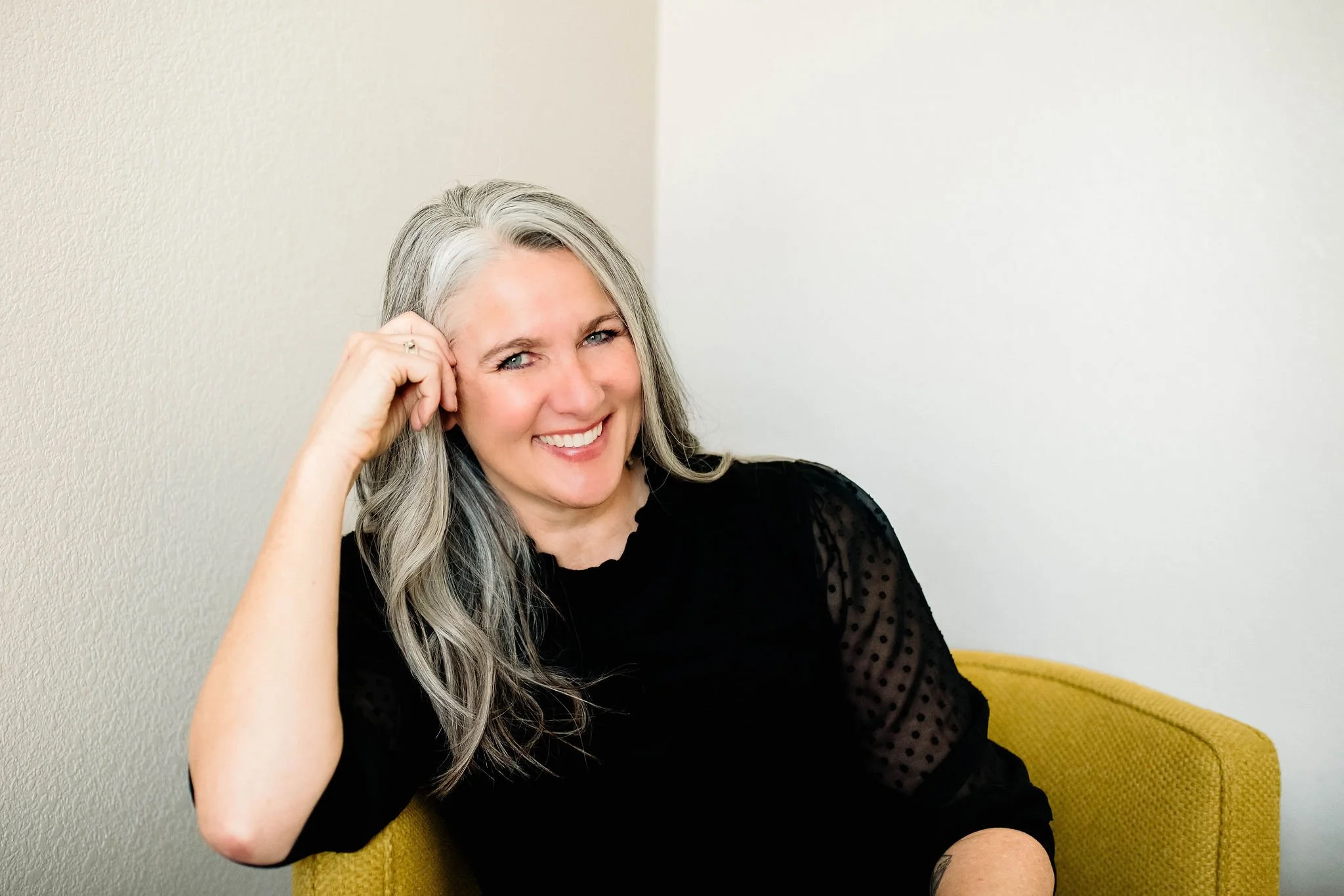
Resilience isn't something you either have or you don't. It's something you build — often from the hardest materials life gives you.
I know this not just as an educator. I know it as a person who has lived it.
I'm Paula Stephens — a resilience educator, contemplative practitioner, and trauma-informed facilitator with over 20 years of experience helping individuals and organizations not just survive difficulty, but grow through it.
THE STORY
My career began in wellness. I taught courses for the American College of Sports Medicine, managed a large fitness program, and taught exercise science at the university level. I loved that work — the science of the human body, the connection between physical health and wellbeing, the way movement could change how people felt in their own lives.
Then in 2010, my oldest son passed away while home on leave from the Army.
It wrecked me. There's no other word for it. The years that followed were about slowly, painfully learning how to carry something that never gets lighter — only more integrated.
Two moments marked the turning point.
The first was a handwritten letter from another mother who had also lost her oldest son. In it she wrote something I have never forgotten:
"You can take those broken pieces of your heart and build expansion joints."
It was the first moment I believed I could make something meaningful from the worst experience of my life.
The second came in 2014, when a blog post I wrote — about what I wished people understood about losing a child — went viral. Thousands of people saw themselves in those words. And I realized that my grief, my experience, my hard-won understanding of loss and resilience — it wasn't just mine to carry. It was mine to offer.
THE EVOLUTION
I began working with other bereaved parents, then shifted to supporting military families navigating trauma and loss. That work led me deeper — into the study of Buddhism and contemplative practice, which transformed not just how I teach but how I show up in a room.
Over the last six years I've worked in mental health adjacent roles — sitting alongside people in some of the hardest moments of their lives. That experience, layered on top of everything that came before, is what shaped the facilitator I am today.
My background now spans exercise physiology, grief and trauma support, Buddhist chaplaincy, and evidence-based mindfulness and self-compassion practices. It's an uncommon combination — and it's exactly what allows me to work at the intersection of science and humanity, rigor and warmth, professional expertise and lived experience.
I don't teach resilience from a textbook. I teach it from a life.
THE PHILOSOPHY
There's a reason I hold a master's degree in exercise physiology and have spent years immersed in contemplative practice, mindfulness, and self-compassion work. To me, they were never separate paths. They were always pointing at the same truth: the mind and body are not two things. They are one system — and real resilience has to work with both.
That integration shapes everything I do.
I also want to be clear about something: I'm not a therapist. By design. I love therapy — I believe in it deeply — but I also know that not every hard moment requires clinical intervention. Sometimes what people need most is a therapeutic space — somewhere they feel safe enough to be honest, supported enough to be vulnerable, and resourced enough to grow. That's the space I create.
And I prefer to create it in groups. Always have. There is something that happens in a room full of people doing hard, meaningful work together — a kind of collective wisdom that no one-on-one session can replicate. When people realize they're not alone in what they're carrying, something shifts. That's not a technique. That's just what community does.
MY APPROACH
I believe every person who walks into one of my sessions is already an expert — in their own life, their own work, their own experience of difficulty. My job isn't to fix anyone or fill them with information. It's to create a space safe enough for that wisdom to surface — theirs and the group's, together.
What happens in my sessions isn't something I perform. It's something we build — in community, together.
"You and your team bring the expertise. I bring the space to use it."

CREDENTIALS
Paula's work has been trusted by the US Department of State, the American Heart Association, the National Fallen Firefighters Foundation, the Tragedy Assistance Program for Survivors, Concerns of Police Survivors, the Tom Coughlin Jay Fund, the Association for Death Education & Counseling, and LifeSource Organ & Tissue Donation, among others.
Her background includes a master's degree in exercise physiology, Buddhist chaplaincy, trauma-informed care, evidence-based mindfulness and trained mindful self-compassion teacher. She is based in Colorado — and ready to travel to you.
I bet you were wondering, “What’s with all the rocks?”
WHY CAIRNS?
A cairn (/kern/) is a stack of stones used to mark the path forward — a simple, quiet guide for anyone navigating rugged terrain. You'll find them across cultures and landscapes, built by people who wanted to say: I was here, and the way forward is this.
To me, cairns are the perfect symbol for resilience. Each stone represents something carried, something survived, something built upon. They're both strong and fragile. Permanent and precarious. A reminder that the path doesn't have to be clear — it just has to be marked well enough to keep going.
That's what I try to be for the people and organizations I work with. Not the one who climbs the mountain for you. Just the one who helps you find the next stone.
Ready to Cultivate Resiliency in Your Personal Life and Workplace?
Contact Paula to book a keynote speech or workshop.